Description
The Problem: Organic waste generation from livestock production and food systems is increasing rapidly across many regions, yet much of it remains poorly managed. This results in environmental pollution, greenhouse gas emissions, and the loss of valuable nutrients that could otherwise be recycled. At the same time, the livestock and aquaculture sectors face rising feed costs and increasing pressure to identify sustainable, locally available protein sources.
The Solution: This study presents an innovative circular bioeconomy approach using black soldier fly (BSF) larvae (Hermetia illucens) to convert organic waste into a high-value protein ingredient for animal feed. By transforming diverse organic residues into nutrient-rich insect biomass, BSF larvae offer a practical solution that links waste management with sustainable feed production. This approach aligns closely with efforts to promote climate-smart and resource-efficient livestock systems.
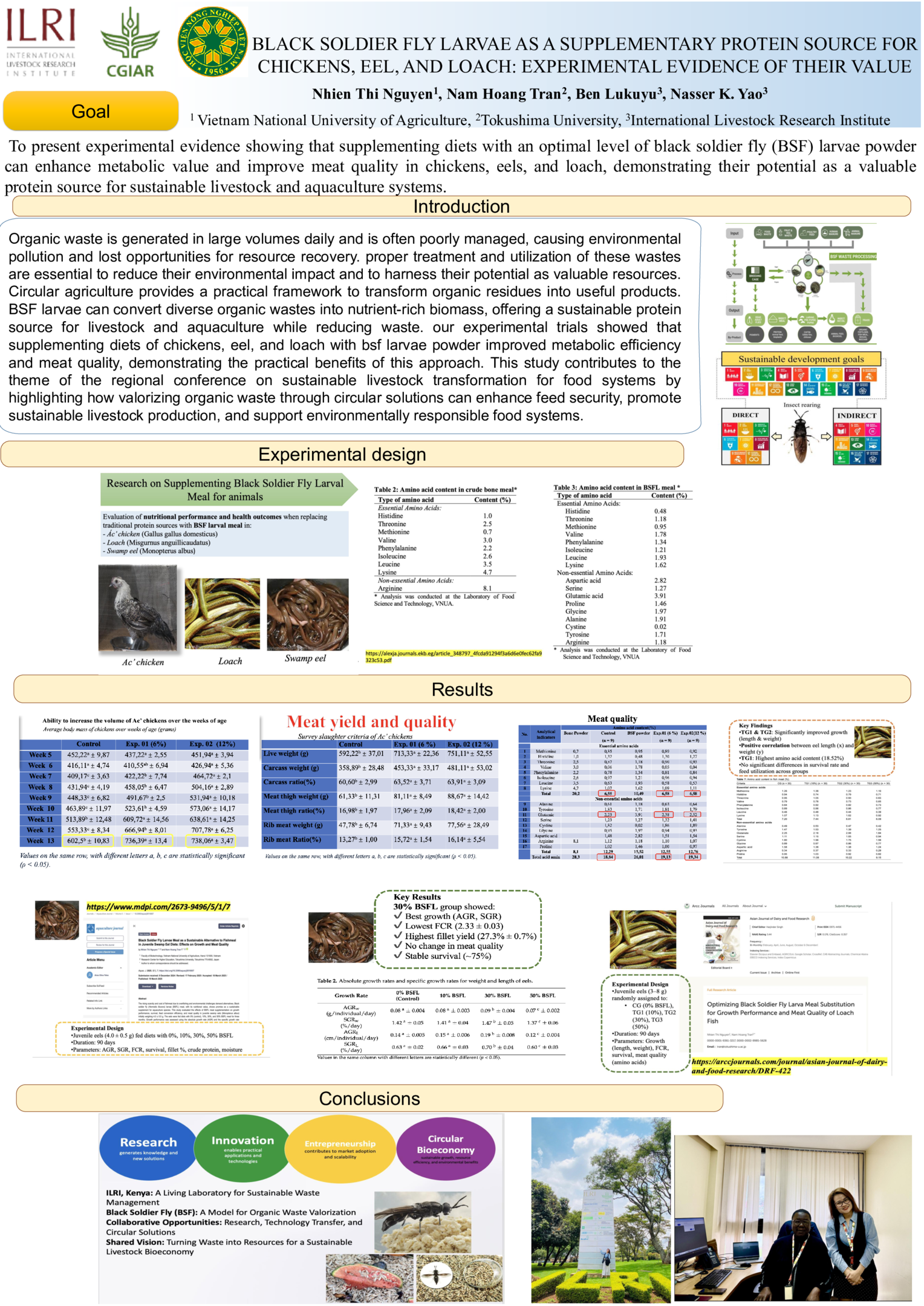
Results and Impact Achieved: Experimental feeding trials were conducted on chickens, swamp eels, and loach to evaluate the effects of supplementing diets with different levels of BSF larvae meal. Results showed that an optimal inclusion level of approximately 30% significantly improved growth performance, feed conversion efficiency, and carcass yield. In swamp eel trials, the BSF-fed group achieved the highest fillet yield (27.3% ± 0.7) and the lowest feed conversion ratio, while maintaining stable survival rates and consistent meat quality. Similar positive effects were observed in poultry and loach, confirming the nutritional value and metabolic benefits of BSF-derived protein.
Scalability and Regional Relevance: Beyond productivity gains, this model demonstrates a scalable innovation for sustainable livestock development. BSF production systems can utilize locally available organic waste streams, require relatively low investment, and can be integrated into smallholder farming systems or emerging insect-based feed enterprises. As part of the Sustainable Livestock Innovation Marketplace, this work highlights how insect-based bioconversion technologies can support circular feed systems, reduce environmental impacts, and strengthen resilient livestock value chains across Southeast Asia and other developing regions.
Comments