Description
The problem: Feed shortages and low-quality feed resources remain major constraints to livestock productivity in the Northwest Highlands of Vietnam. Smallholder systems rely largely on natural grasses and crop residues, which are often insufficient in both quantity and nutritional value. Seasonal feed scarcity during the winter months further limits animal growth, reduces productivity, and constrains farmers’ incomes. These challenges are particularly significant for smallholder cattle and pig producers, who often have limited access to improved feeding technologies, knowledge on feed management, and extension services. Addressing these constraints requires practical, locally adapted solutions that improve feed availability, quality, and management throughout the year.
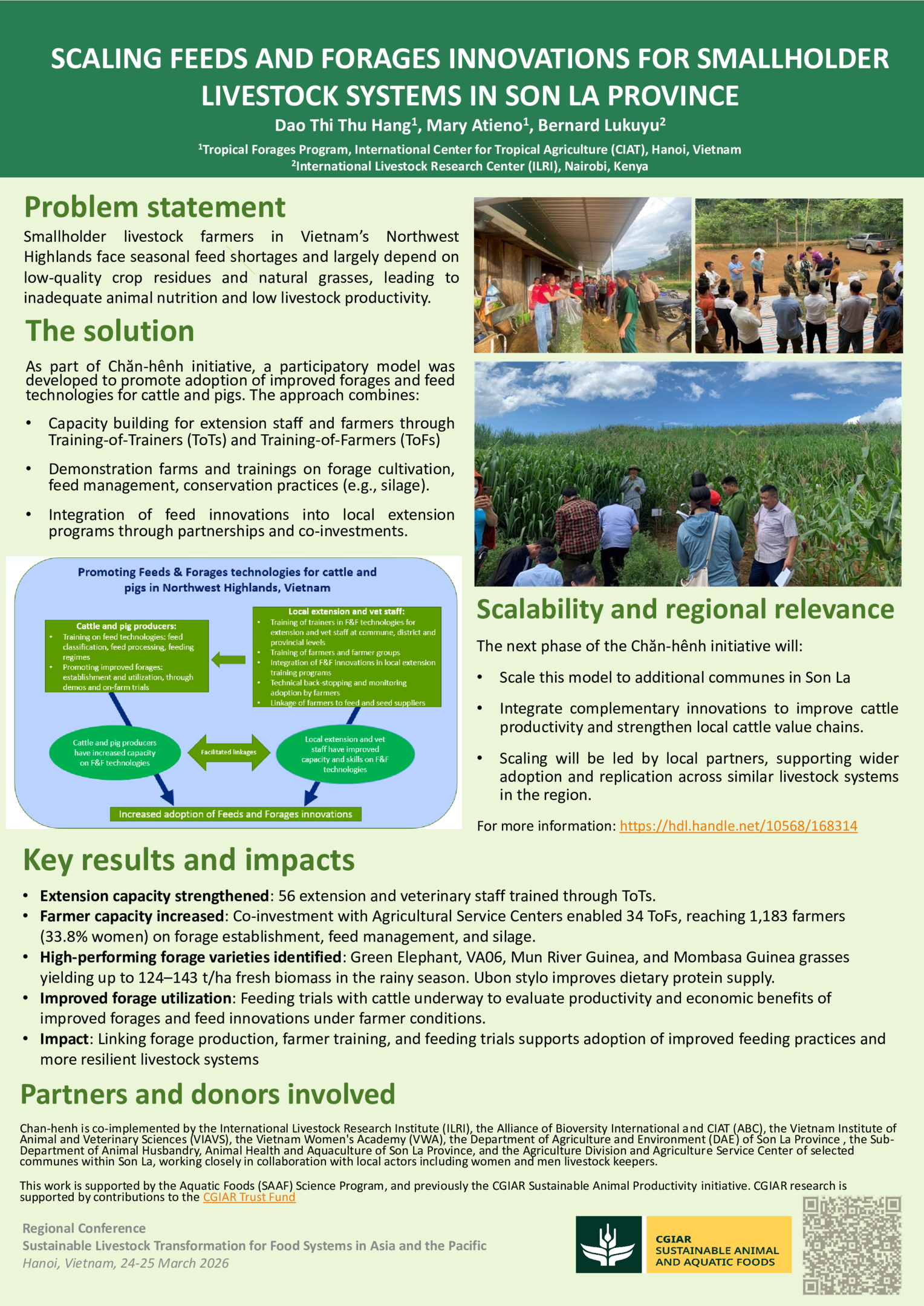
The solution: A participatory model was developed to promote the adoption and effective use of improved feeds and forage technologies for cattle and pigs. The model links forage production, promotion, and utilization through an integrated approach combining on-farm demonstrations, capacity building, and applied testing. Demonstration farms are established to evaluate and showcase suitable forage varieties and improved feed options under local conditions. These are complemented by capacity-building activities for extension staff and farmers through Training-of-Trainers (ToT) and Training-of-Farmers (ToF), strengthening knowledge on forage cultivation, feed management, and feed conservation practices such as silage making.
To ensure that improved forages translate into tangible productivity gains, the model also incorporates feeding trials with cattle and pigs. Selected forage varieties and feed innovations are tested under farmer-managed conditions, generating practical evidence on animal performance, feed intake, and productivity. These trials allow farmers to directly observe the benefits of improved feeding practices and build confidence in adopting new technologies.
Results and impact achieved: The approach has strengthened farmers’ knowledge and skills in forage production and livestock feeding, improved the availability of quality feed resources, and demonstrated the productivity benefits of improved practices. Extension agents have also enhanced their capacity to support farmers in adopting feed innovations.
Scalability and regional relevance: The model supports scaling by integrating feed and forage innovations into local extension systems through partnerships with local institutions and development actors. The next phase of the SAPLING initiative will expand this approach to additional communes in Son La Province, contributing to broader efforts to strengthen the cattle value chain and improve livestock productivity among smallholder farmers.
Comments