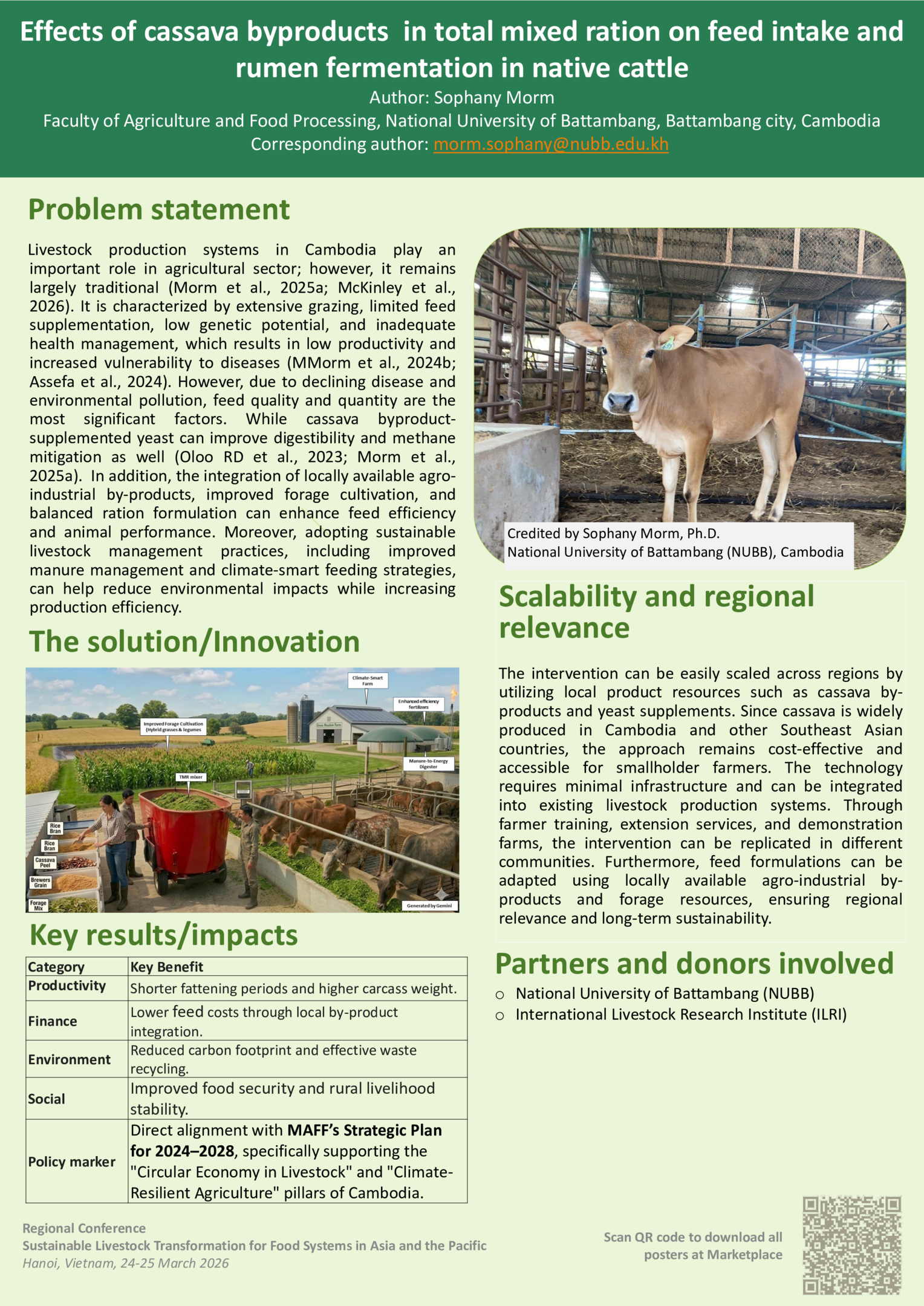
Description
Livestock production systems in Cambodia play an important role in the agricultural sector; however, they remain largely traditional (Morm et al., 2025a; McKinley et al., 2026). These systems are characterized by extensive grazing, limited feed supplementation, low genetic potential, and inadequate health management, resulting in low productivity and increased vulnerability to diseases (Morm et al., 2024b; Assefa et al., 2024). In addition, constraints related to feed quality and quantity are among the most significant factors limiting system performance, alongside disease risks and environmental pressures.
Cassava by-products supplemented with yeast have shown potential to improve digestibility and reduce methane emissions (Oloo RD et al., 2023; Morm et al., 2025a). Furthermore, the integration of locally available agro-industrial by-products, improved forage cultivation, and balanced ration formulation can enhance feed efficiency and animal performance.
Adopting sustainable livestock management practices, including improved manure management and climate-smart feeding strategies, can further reduce environmental impacts while increasing production efficiency.
Comments