Description
The problem: Smallholder livestock systems in the upland regions of Northwest Vietnam are a crucial source of food, nutrition, and income for rural households, particularly among ethnic minority communities. However, these systems face multiple constraints that limit productivity and sustainability. Farmers often lack access to improved livestock genetics and quality feed, especially during seasonal shortages. Livestock diseases remain widespread due to limited veterinary services and weak animal health systems. Limited access to markets further reduces opportunities for smallholders to increase income from livestock products. Gender barriers persist, restricting women’s participation in livestock decision-making and their access to training, services, and markets. Addressing these interconnected challenges requires integrated approaches that strengthen both technical and institutional aspects of livestock development.
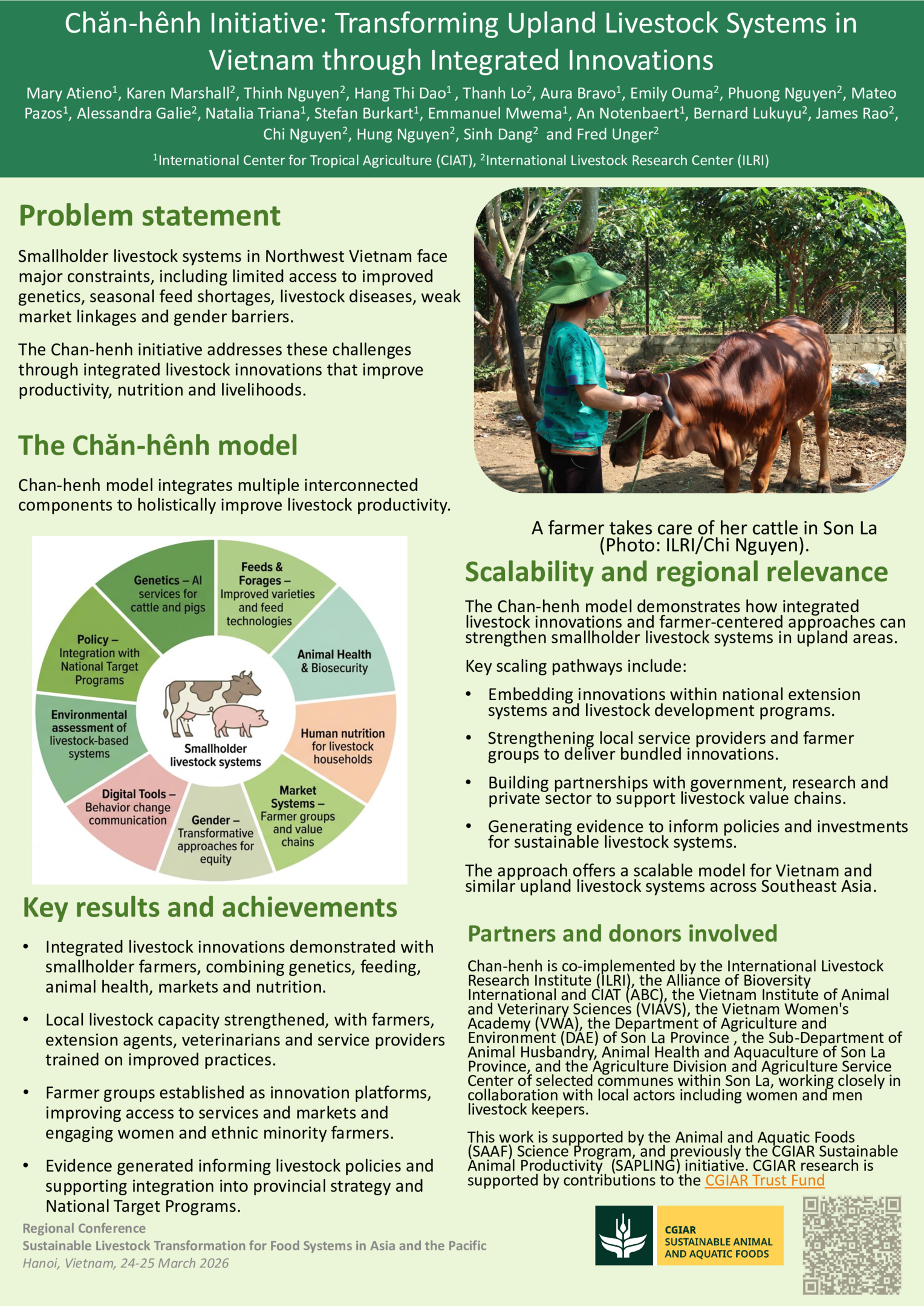
The solution: The Chăn-hênh Initiative introduces an integrated livestock development model designed to tackle these challenges holistically. The approach combines innovations in livestock genetics, feeding, animal health management, market engagement, and household nutrition. Farmer groups serve as innovation platforms, enabling smallholders to access training, advisory services, veterinary support, and improved inputs. The initiative also builds the capacity of local service providers—including extension agents and veterinarians—to deliver bundled livestock services. Gender-responsive strategies ensure the active participation of women and ethnic minority farmers in training, decision-making, and livestock value chains.
Results and impact: The initiative has successfully demonstrated integrated livestock innovations with smallholder farmers, improving management practices and productivity. Capacity-building activities have strengthened the skills of farmers, extension agents, veterinarians, and local service providers. Farmer groups have fostered collaboration among livestock keepers and improved access to services and markets. Evidence generated through the initiative has informed livestock policies and supported the integration of innovations into provincial strategies and national development programs.
Scalability and regional relevance: The Chăn-hênh model provides a practical framework for scaling livestock innovations in upland areas. By embedding innovations within extension systems, strengthening local service providers, and fostering partnerships among government, research, and private sector actors, the model creates sustainable pathways for scaling in Vietnam and across similar upland livestock systems in Southeast Asia.
Comments