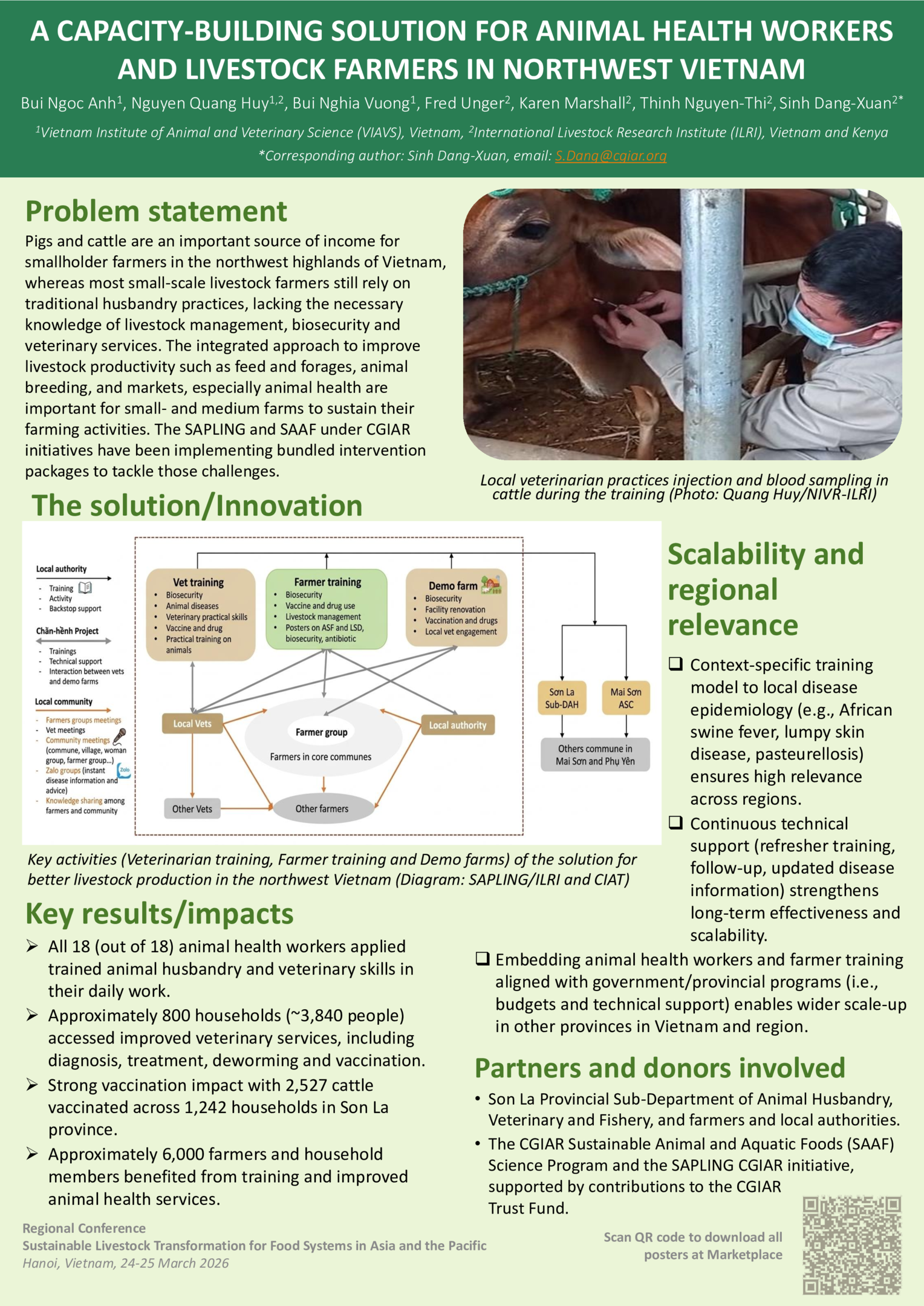
Description
The Problem: Pigs and cattle are an important source of income for smallholder farmers in the northwest highlands of Vietnam, whereas most small-scale livestock farmers still rely on traditional husbandry practices, lacking the necessary knowledge of livestock management, biosecurity and veterinary services. The integrated approach to improve livestock productivity such as feed and forages, animal breeding, and markets, especially animal health are important for small- and medium farms to sustain their farming activities. The SAPLING and SAAF under CGIAR initiatives/programs have been implementing bundled intervention packages to tackle those challenges.
The solution/ Innovation: Under the Chăn-Hênh project (SAPLING CGIAR initiative, 2022-2024), the animal health model has been developed to promote the adoption of innovations for cattle and pig keepers in Son La. The model focuses on herd health, including biosecurity, animal management, housing, vaccination, parasite control and antimicrobial use, with the following main activities: (i) Capacity building for livestock farmers on biosecurity and animal health; (ii) Capacity building for local animal health workers; and (iii) Establishing demonstration farms. The approach has continued to adapt and be used under the CGIAR SAAF science program (2025-2030).
Key results/ Impacts: All eighteen animal health workers applied their trained animal husbandry and veterinary skills in daily practice. Approximately 800 households (~3,840 people) accessed improved veterinary services, including diagnosis, treatment, deworming, and vaccination. A total of 2,527 cattle were vaccinated across 1,242 households in Son La province. Around 6,000 farmers and household members benefited from the training and improved animal health services.
Scalability and regional relevance: Context-specific training model to local disease epidemiology (e.g., African swine fever, lumpy skin disease, pasteurellosis) ensures high relevance across regions. Continuous technical support (such as refresher training, follow-up, updated disease information) strengthens long-term effectiveness and scalability. Embedding animal health workers and farmer training aligned with government and/or provincial programs (i.e., budgets and technical support) enables wider scale-up in other provinces in Vietnam and the region.
Comments