Description
Agriculture generates large volumes of organic waste, including livestock manure, crop residues, agro-processing by-products, and food waste. In many regions, these materials are poorly managed, leading to environmental pollution, methane emissions, and inefficient nutrient use. At the same time, livestock production systems face increasing challenges such as rising protein feed costs, dependence on imported soybean meal, and growing pressure to reduce greenhouse gas emissions. These challenges highlight the need for circular solutions that transform agricultural waste into valuable resources while supporting climate-smart livestock production.
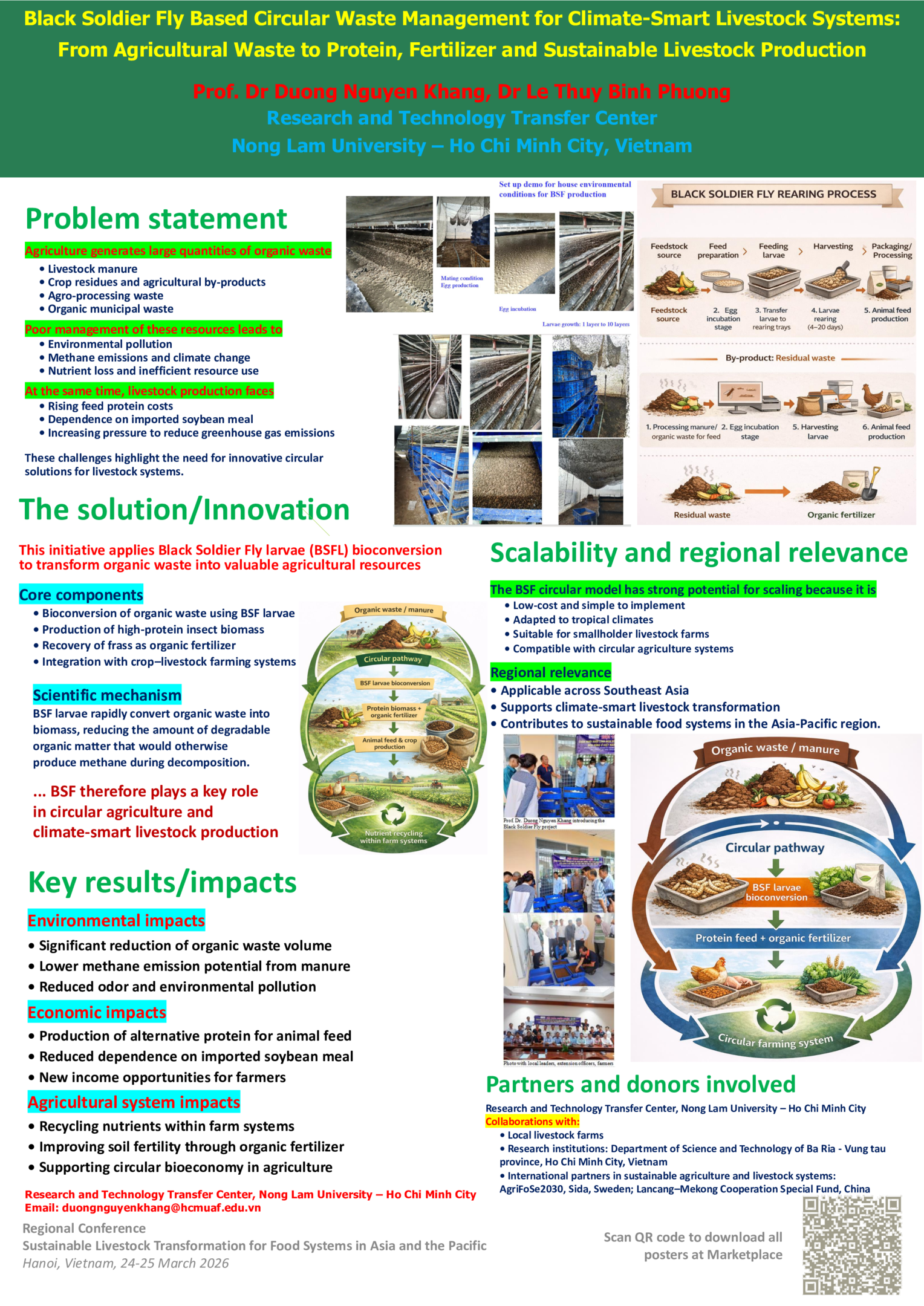
This initiative promotes a circular agriculture approach based on Black Soldier Fly larvae (BSFL) bioconversion, which converts organic waste into high-protein insect biomass for animal feed and organic fertilizer (frass). The system integrates crop and livestock production by recycling nutrients and reducing organic waste accumulation. Through research and technology transfer projects led by Nong Lam University – Ho Chi Minh City and collaborating institutions, pilot models have been implemented with livestock farms and local partners, demonstrating practical circular farming solutions at farm and community levels.
The results show important environmental and economic benefits. BSF bioconversion can significantly reduce organic waste volume and methane emissions from manure decomposition. At the same time, it provides alternative protein sources for livestock feed, reducing reliance on imported ingredients and creating additional income opportunities for farmers. The organic fertilizer from BSF frass also contributes to improving soil fertility and nutrient recycling.
Experience from these projects highlights that the key challenge lies not only in the technology but also in the capacity to train farmers, technicians, and enterprises to implement it effectively. Scaling circular livestock systems requires practical training, demonstration farms, and strong collaboration among universities, extension services, private enterprises, and farming communities. Continued support from research and development projects is essential to expand pilot models, strengthen technical capacity, and promote wider adoption of circular waste management systems. With appropriate investment and capacity building, the BSF circular model has strong potential to scale across Southeast Asia, contributing to sustainable livestock transformation, waste reduction, and climate-smart agriculture in the region.
Comments