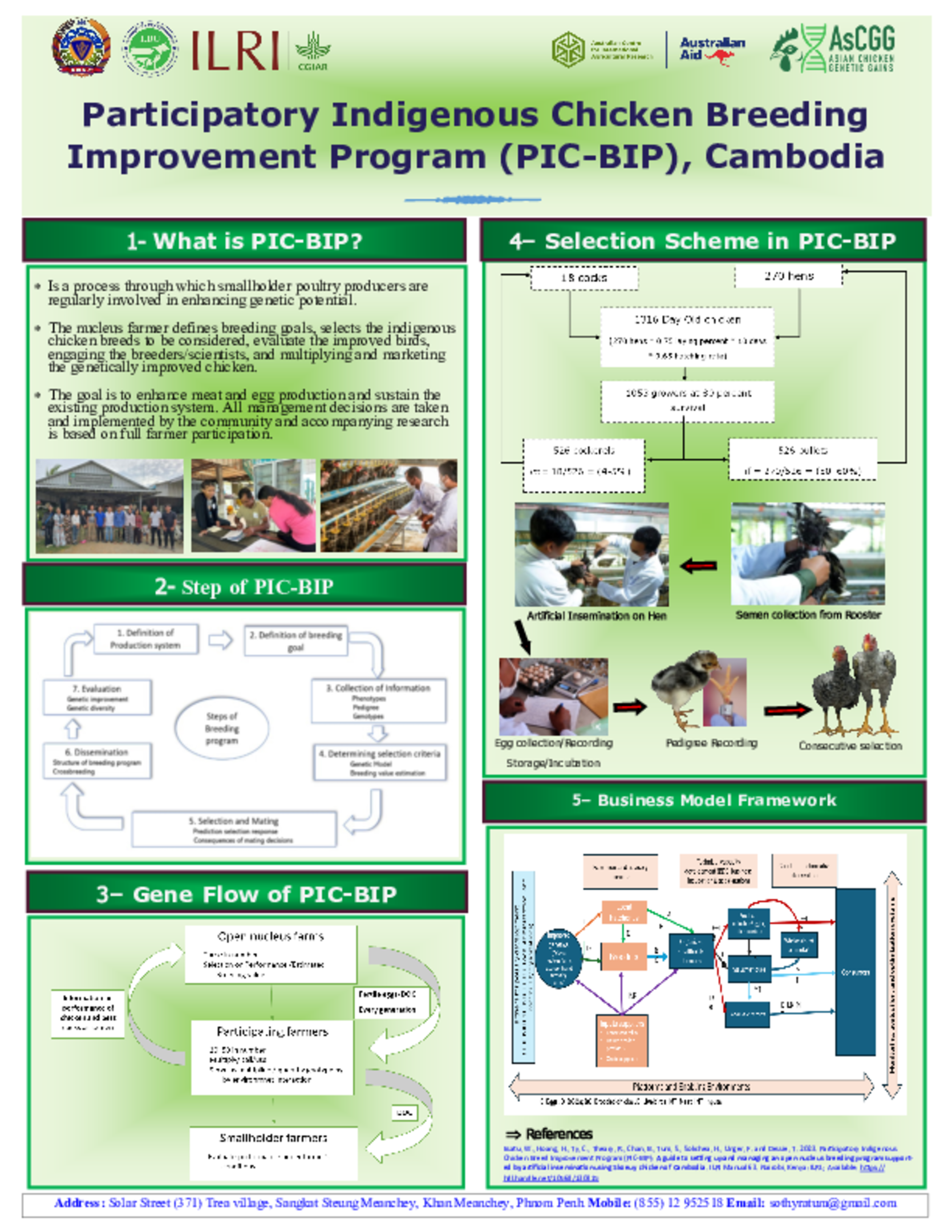
Description
The Problem: Smallholder chicken farming plays a crucial role in generating household income and providing an affordable source of protein. Most farmers raise indigenous breeds that are climate-hardy and disease-tolerant. However, these breeds are largely maintained under natural selection within small-scale production systems, and farmers continue to face high mortality rates, undesirable traits, and inconsistent production performance, despite multiple improvement efforts.
The solution: The Participatory Indigenous Chicken Breed Improvement Program (PIC-BIP) is being implemented in Takeo Province, Cambodia, focusing on the genetic improvement of a locally preferred indigenous breed known as “Skuoy” into a dual-purpose (meat and egg) native chicken. The program adopts a participatory approach to define breeding objectives and market-preferred traits, including plumage colour, skin and shank colour, shank length, comb type, market weight and age, and egg production. The program was initiated in July 2023 with 3,000 day-old chicks (DoC) selected from a random population of Cambodian native chickens.
Key results / impacts: The program has improved the uniformity of day-old chicks, increased body weight at market age, and enhanced annual egg production across successive selected generations. Approximately 30,000 improved chickens per year have been produced and distributed among farmer groups, cooperatives, and farmers in other provinces of Cambodia.
Scalability and regional relevance: The improved indigenous chicken breeding program provides a platform to strengthen public–private–farmer partnerships, enhance household incomes, support climate-smart agriculture, and promote an integrated One Health approach.
Keywords: PIC-BIP, Skuoy, indigenous chicken, breed selection
Comments