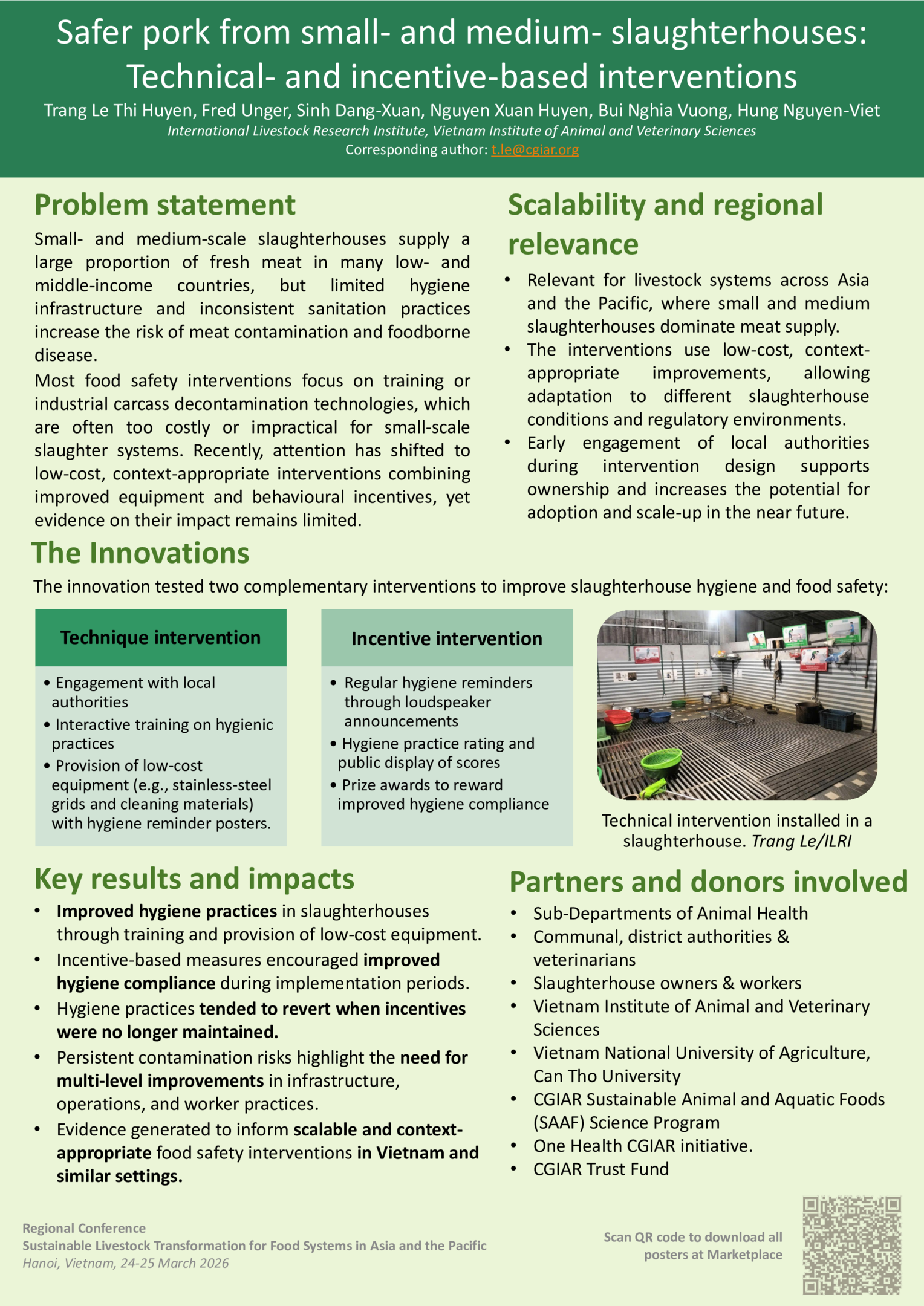
Description
Small-scale slaughterhouses supply a large share of fresh meat in many low- and middle-income countries, including Vietnam. However, limited hygiene infrastructure, inconsistent sanitation practices, and informal operations increase the risk of microbial contamination and foodborne diseases. Most food safety interventions in these settings focus on training or industrial carcass decontamination technologies, which are often costly or impractical for small-scale systems. As a result, there is a need for practical, low-cost approaches that improve hygiene practices and motivate behavioral change among slaughterhouse workers.
This study tested two complementary interventions to improve hygiene practices. The technical intervention combined engagement with local authorities, interactive training on hygienic practices, and provision of low-cost equipment such as stainless-steel grids, cleaning materials, and hygiene reminder posters. The incentive intervention assessed whether rewarding workers for improved hygiene compliance could strengthen the adoption of recommended practices through regular reminders, public scoring of hygiene performance, and prize awards.
Results showed high levels of microbial contamination, but improvements in hygiene practices were observed, particularly where training and equipment were provided. Incentive-based measures helped improve compliance during implementation; however, practices tended to revert once incentives were withdrawn. Overall, the findings highlight the importance of combining structural improvements with strategies that influence worker behavior to achieve sustained food safety outcomes.
The intervention approach is highly relevant for livestock systems across Asia and the Pacific, where small and medium-scale slaughterhouses dominate meat supply. By focusing on low-cost, context-appropriate solutions and worker engagement, the model can be adapted to different slaughterhouse conditions. Early engagement with local authorities also supports ownership and increases the potential for adoption and scale-up. These findings provide practical insights for developing scalable and sustainable food safety interventions in Vietnam and similar low- and middle-income country settings.
Keywords: Food safety; hygiene practices; behavioral incentives; innovation; Asia
Comments