Description
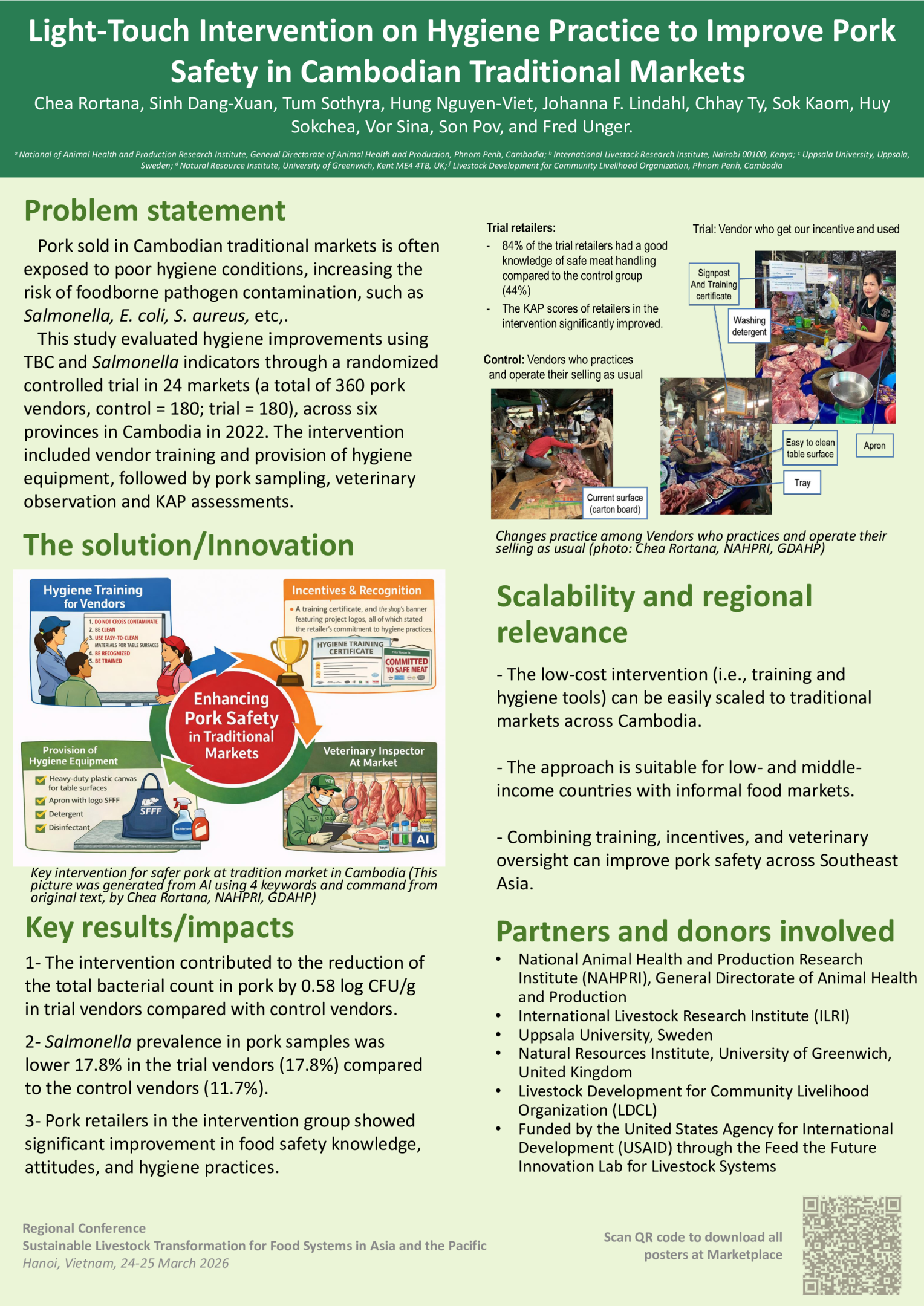
This study evaluated hygiene improvements using total bacterial count (TBC) and Salmonella indicators through a randomized controlled trial in 24 markets across six provinces in Cambodia in 2022, involving 360 pork vendors (control: 180; intervention: 180). The intervention included vendor training and provision of hygiene equipment, followed by pork sampling, veterinary observation, and KAP (knowledge, attitudes, and practices) assessments.
The intervention contributed to a reduction in total bacterial count in pork by 0.58 log CFU/g among intervention vendors compared with the control group. Salmonella prevalence in pork samples was also lower in the intervention group (11.7%) compared to the control group (17.8%). In addition, pork retailers in the intervention group showed significant improvements in food safety knowledge, attitudes, and hygiene practices.
This low-cost intervention—combining training and hygiene tools—can be easily scaled to traditional markets across Cambodia. The approach is well suited for low- and middle-income countries with informal food markets. More broadly, integrating training, incentives, and veterinary oversight offers strong potential to improve pork safety across Southeast Asia.
Comments