Description
Problem being addressed:
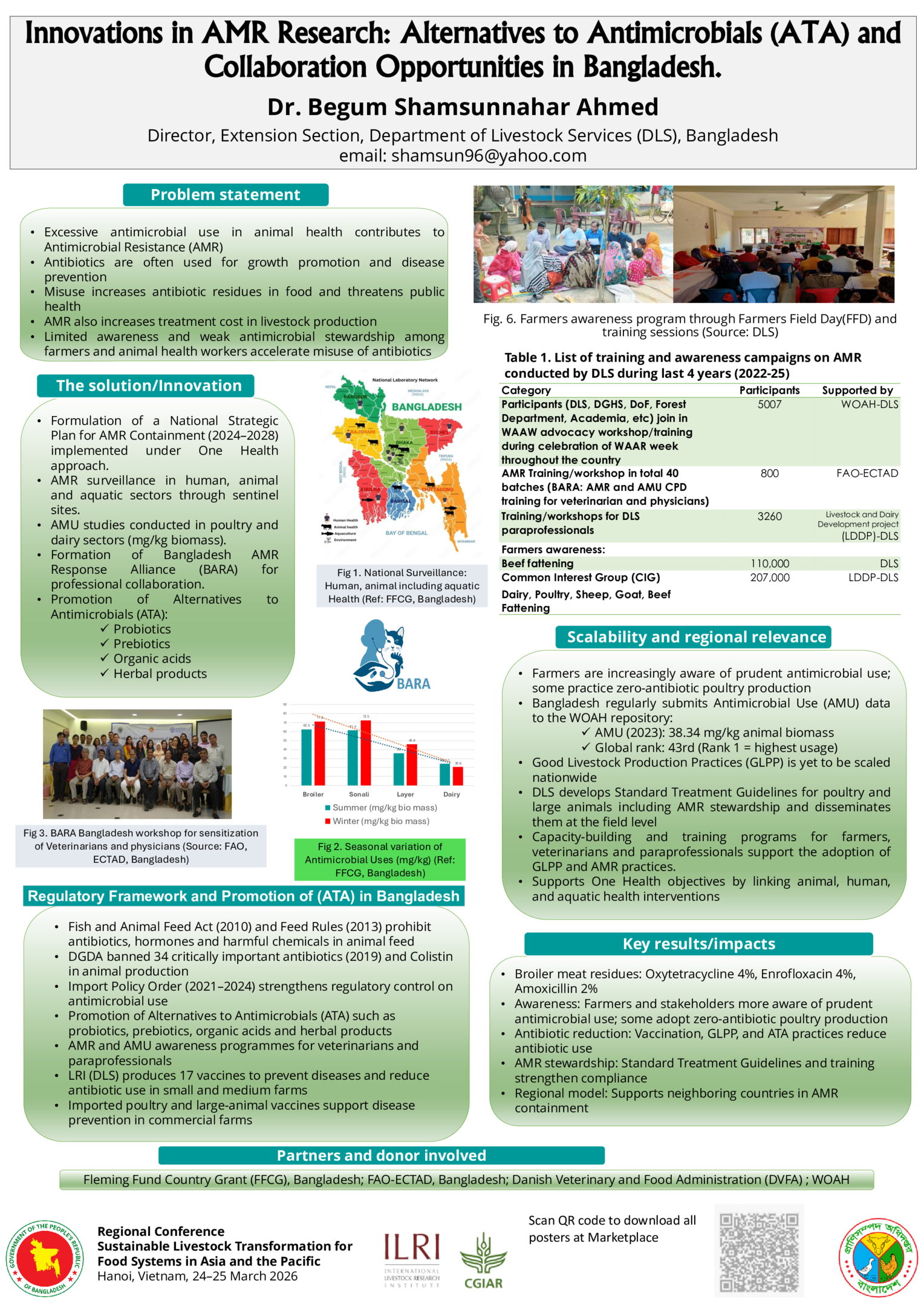
Excessive antimicrobial use (AMU) in livestock contributes to antimicrobial resistance (AMR), posing serious risks to public health and increasing treatment costs. Antibiotics are widely used for growth promotion and disease prevention in poultry and dairy systems, while limited awareness and weak antimicrobial stewardship among farmers and animal health workers further drive misuse.
Solution/Innovation:
Bangladesh has adopted a One Health-based approach to AMR containment through several key interventions. These include the National Strategic Plan for AMR Containment (2024–2028), AMR surveillance across human, animal, and aquatic sectors through sentinel sites, and AMU studies in poultry and dairy (measured in mg/kg biomass) to track trends. The Bangladesh AMR Response Alliance (BARA) promotes professional collaboration for AMR containment.
In parallel, the country is promoting alternatives to antimicrobials (ATA), such as probiotics, prebiotics, organic acids, and herbal products, alongside Good Livestock Production Practices (GLPP) and vaccination to reduce antibiotic use. Standard Treatment Guidelines (STG) have also been introduced, supported by capacity-building programs for veterinarians, paraprofessionals, and farmers.
Results and impact achieved:
Initial results show promising progress. Antibiotic residues in broiler production have been reduced (Oxytetracycline 4%, Enrofloxacin 4%, Amoxicillin 2%). There is increased farmer awareness and growing adoption of zero-antibiotic poultry production systems. Antimicrobial use has declined through improved vaccination, GLPP, and ATA practices. At the same time, AMR stewardship has been strengthened, with better compliance with treatment guidelines, contributing to One Health objectives linking human, animal, and aquatic health.
Scalability and regional relevance:
Nationwide training and awareness programs have reached over 300,000 participants, including farmers, paraprofessionals, and veterinarians. Regular AMU reporting to WOAH contributes to global monitoring efforts (AMU 2023: 38.34 mg/kg biomass; ranked 43rd globally). The approach offers a replicable model for countries in South and Southeast Asia facing similar AMR challenges. Its integrated One Health framework makes it highly relevant for regional adoption and policy guidance.
Comments