Description
Pig and poultry production in Viet Nam face significant husbandry and disease challenges, including frequent outbreaks of African Swine Fever (ASF) and Avian Influenza (AI), fragmented smallholder systems, and rising concerns over antimicrobial resistance (AMR). While biosecurity is essential for disease prevention and reducing antibiotic use, its adoption among small- and medium-scale producers is often constrained by technical, financial, and organizational barriers. Existing guidelines are frequently too general or require high investment, making it difficult for farmers to prioritize effective measures.
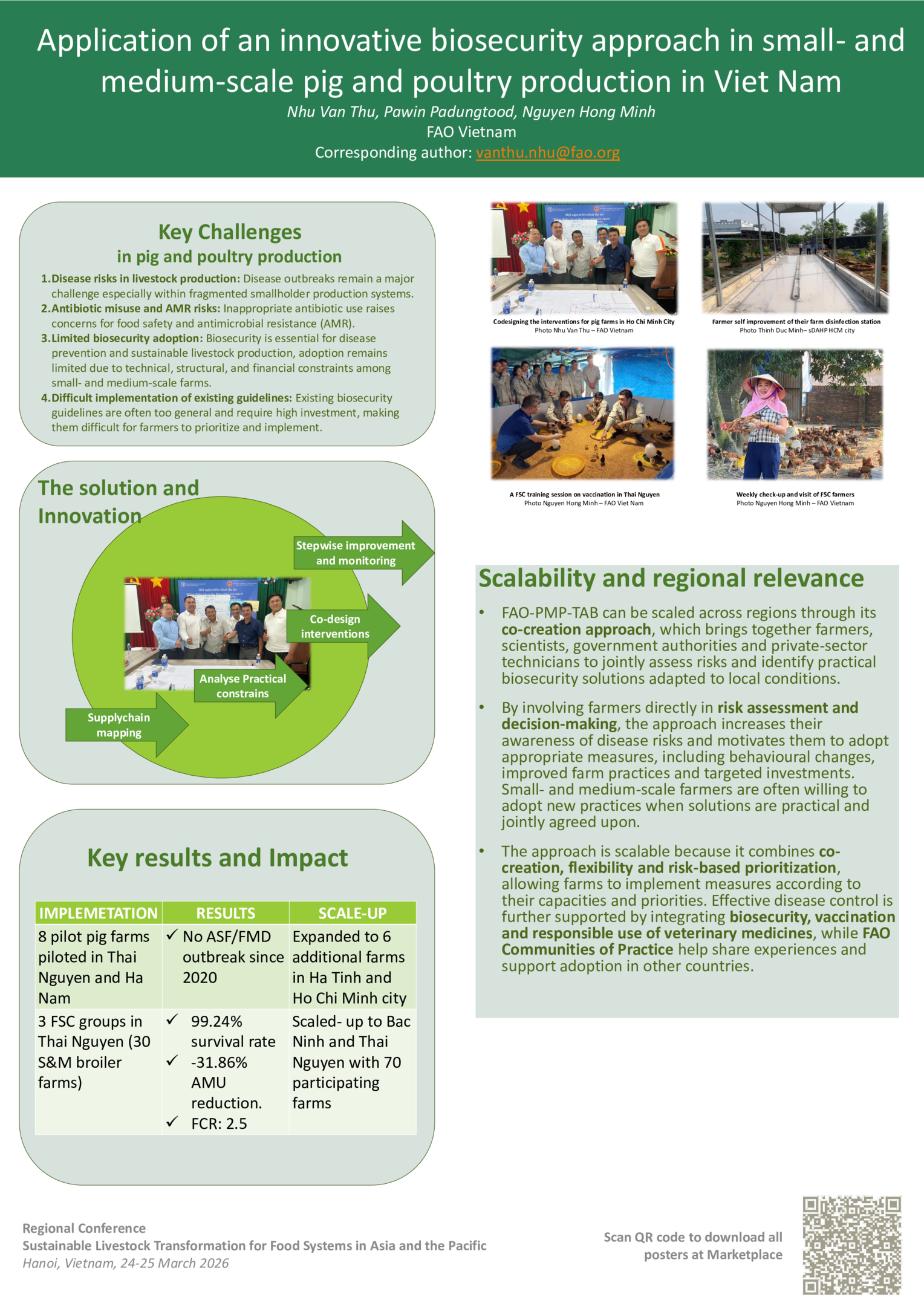
To address this, the Food and Agriculture Organization (FAO) developed the Progressive Management Pathway for Terrestrial Animal Biosecurity (FAO-PMP-TAB). This framework uses a participatory co-creation approach, engaging farmers as active partners to identify farm-specific risks and design feasible, stepwise improvement plans. This process strengthens farmer ownership, encourages behavioral change, and supports sustained adoption of biosecurity measures.
Key outcomes and implementation:
Pig production: In collaboration with the Department of Animal Health and Production (DAHP) and the National Agricultural Extension Centre (NAEC), FAO piloted this approach in Thai Nguyen and Ha Nam provinces. Eight participating farms have reported zero outbreaks of ASF or foot-and-mouth disease (FMD) since 2020. The model has since expanded to Ha Tinh and Ho Chi Minh City.
Poultry production: Biosecurity has been integrated into Farmer School Communities (FSCs), developed based on the Farmer Field School approach, to improve husbandry and reduce antimicrobial use. From an initial three FSC groups in Thai Nguyen in 2024, the initiative is expanding to Bac Ninh, targeting 70 participating farms by 2026.
The FAO-PMP-TAB approach is highly scalable because it combines co-creation, flexibility, and risk-based prioritization. By bringing together farmers, scientists, and government authorities, it identifies practical solutions adapted to local conditions. This shift from reactive disease control to proactive, farmer-centered prevention provides a sustainable pathway toward a more resilient livestock sector in Viet Nam.
Comments