Description
Enteric methane from sheep is a significant contributor to agricultural greenhouse gas emissions and represents a substantial loss of feed energy, with up to 12% of dietary energy lost during rumen fermentation. Although methane-reducing feed additives have shown promise in controlled studies, evidence of their effectiveness under commercial grazing conditions remains limited, where variable pasture availability, feeding behaviour, and farm management can influence adoption and performance. This study addressed the need for a practical, farm-ready methane mitigation strategy that can reduce emissions from grazing sheep without compromising growth, health, or routine farm management.
The solution evaluated was the use of two commercially available feed additives, Agolin, an essential oil blend, and Polygain, a sugarcane-derived polyphenol extract, delivered through standard pellets to grazing lambs on a commercial sheep farm in Victoria, Australia. In a field experiment, 200 Merino × Border Leicester crossbred lambs were allocated to four groups: control, Agolin, Polygain, and a combined Agolin–Polygain treatment. Methane emissions were monitored using the GreenFeed system, animals were weighed regularly, and blood metabolites were analysed to assess health and metabolic status. This delivery model was designed to align with existing grazing and pellet-feeding systems, making it directly applicable to commercial producers.
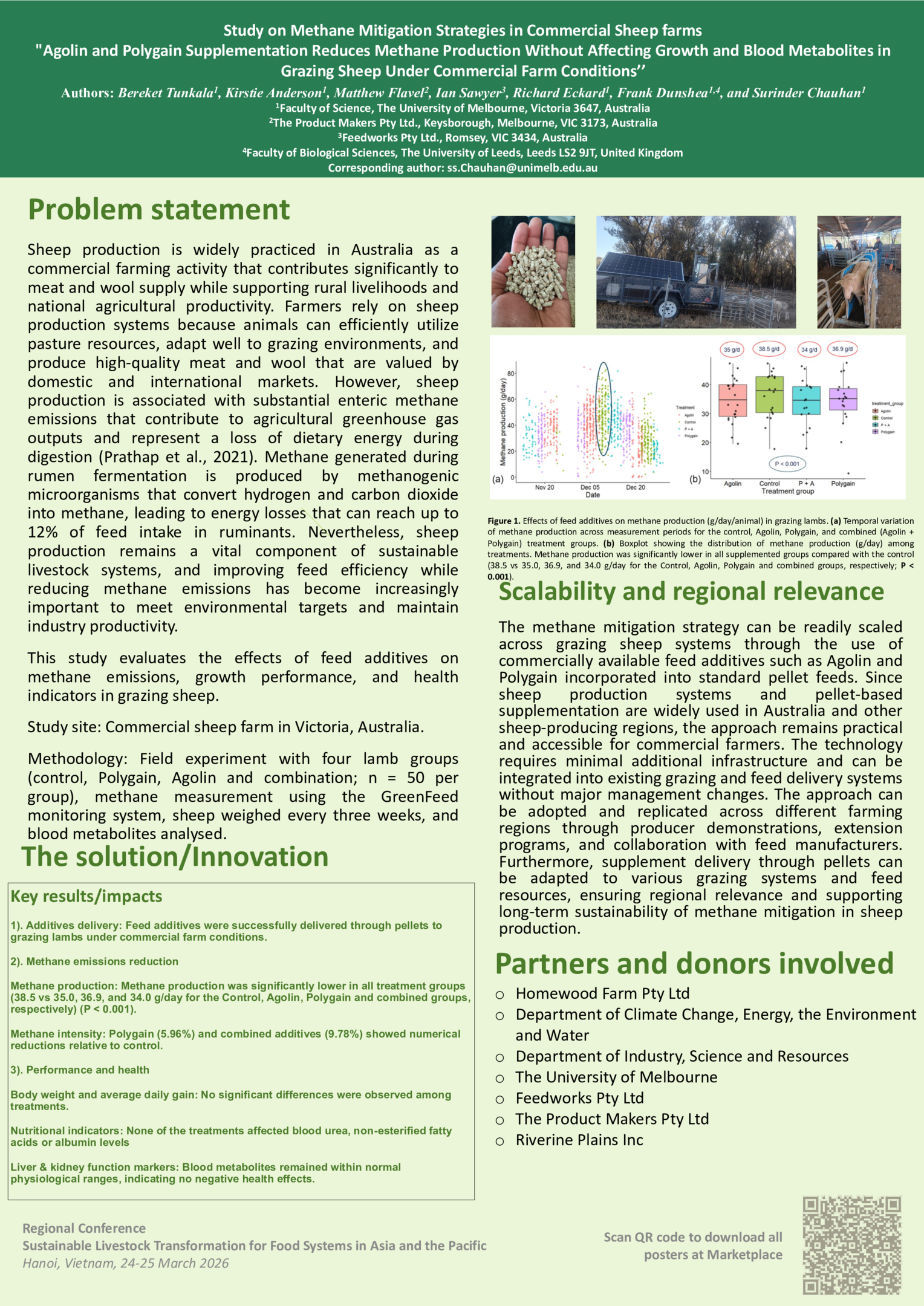
Methane production was significantly reduced in all supplemented groups compared with the control, with values of 38.5, 35.0, 36.9, and 34.0 g/day for the control, Agolin, Polygain, and combined treatments, respectively (P < 0.001). No significant differences were observed in body weight gain or average daily gain, and blood metabolites remained within normal physiological ranges, indicating no adverse effects on animal health.
The strategy is scalable across sheep-producing regions, as it relies on commercially available additives, standard pellet delivery, and minimal additional infrastructure. It is well suited to Australian grazing systems and has broader relevance for other regions seeking practical, low-disruption methane mitigation options for commercial sheep production.
Comments