Description
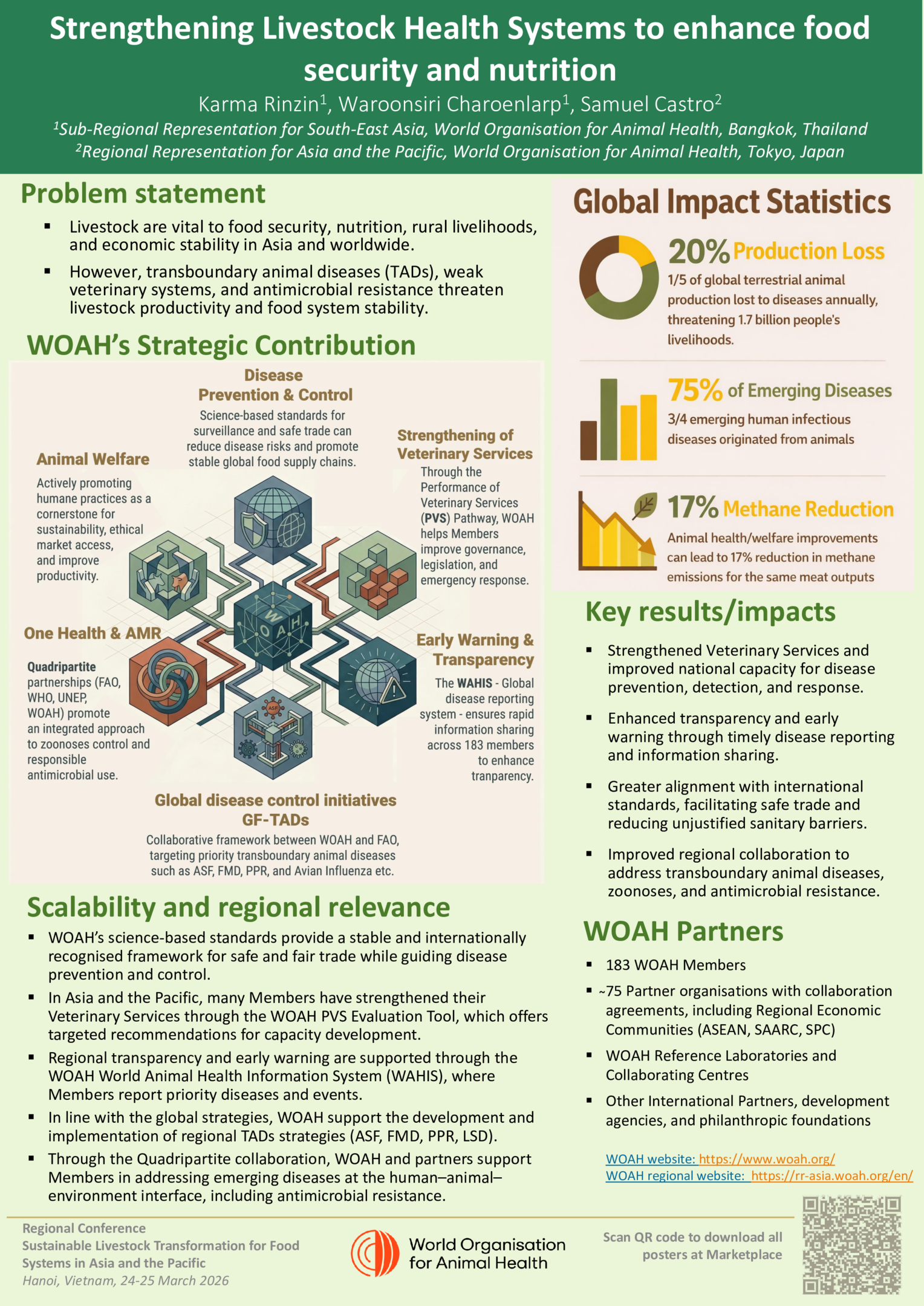
Livestock plays a critical role in food security, nutrition, rural livelihoods, and economic stability across Asia and globally. Animal-source foods provide high-quality protein and essential micronutrients, particularly for vulnerable populations, while livestock production supports millions of smallholder farmers and value chain actors. However, the sustainability of livestock systems is increasingly threatened by transboundary animal diseases (TADs), weak veterinary systems, and the growing challenge of antimicrobial resistance (AMR), which reduce productivity, disrupt food supply chains, and undermine resilience.
The World Organisation for Animal Health (WOAH) plays a central role in strengthening global animal health systems. Through science-based international standards for disease prevention, surveillance, and safe trade, WOAH helps reduce risks while promoting stable food supply chains. Strengthening Veterinary Services is a key pillar of its work. Through the Performance of Veterinary Services (PVS) Pathway, WOAH supports Members in improving governance, legislation, surveillance, and emergency response capacity to better prevent, detect, and respond to disease threats.
WOAH also promotes transparency and early warning through the World Animal Health Information System (WAHIS), enabling rapid information sharing on priority animal diseases. This supports timely risk assessment, coordinated responses, and the protection of regional and global food security. In addition, WOAH contributes to global disease control through the Global Framework for the Progressive Control of Transboundary Animal Diseases (GF-TADs), a joint initiative with the Food and Agriculture Organization of the United Nations (FAO), targeting priority diseases such as African swine fever, foot-and-mouth disease, peste des petits ruminants, and avian influenza.
In collaboration with Quadripartite partners—FAO, the United Nations Environment Programme, and the World Health Organization—WOAH promotes a One Health approach to zoonotic disease control and responsible antimicrobial use, addressing risks at the human–animal–environment interface.
WOAH’s approaches are scalable and regionally relevant. Its standards provide a globally recognized framework for disease control and safe trade, while the PVS Pathway has supported many countries in Asia and the Pacific. Together, these efforts strengthen veterinary systems, improve disease response, enhance transparency, and contribute to resilient food systems, safeguarded livelihoods, and improved food security and nutrition worldwide.
Comments