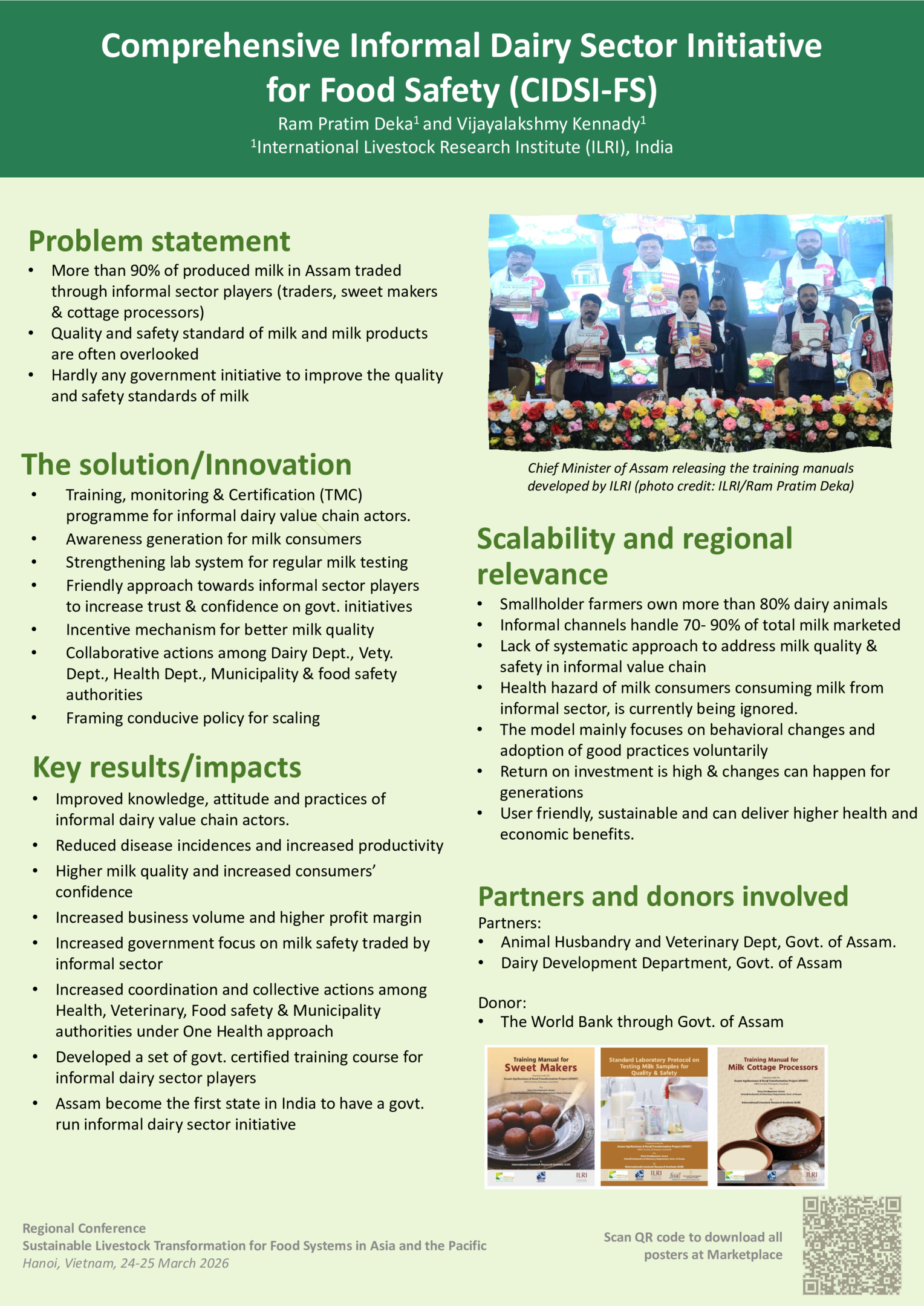
Description
The Problem: In states like Assam, more than 90% of milk is traded through informal actors, including traders, sweet makers, and cottage processors. Despite this dominance, quality and safety standards are frequently overlooked, and there has historically been a lack of government initiatives to regulate or support this sector. This neglect poses significant health hazards to consumers and leaves smallholder farmers—who own over 80% of dairy animals—without a systematic framework for ensuring safety.
The Solution: The ILRI-developed innovation centers on a Training, Monitoring & Certification (TMC) program. Key components include:
- Institutional innovation: Collaborative “One Health” actions among veterinary, health, and food safety departments.
- Market and policy innovation: A shift from policing to a “friendly approach” to build trust, combined with incentive mechanisms for quality improvement and an enabling policy environment for scaling.
- Practice change: A focus on voluntary behavioral changes and the adoption of good practices through government-certified training manuals.
- Results and Impact: Assam is the first state in India to implement a government-run initiative for the informal dairy sector. Impacts include:
- Improved knowledge and practices among value chain actors, leading to higher milk quality and increased consumer confidence.
- Economic gains through increased business volume and higher profit margins.
- Reduced disease incidence and increased livestock productivity.
Scalability and Regional Relevance: The model is highly relevant across Asia and the Pacific, where informal channels typically handle 70–90% of marketed milk. As a user-friendly and sustainable approach that offers a high return on investment by focusing on long-term behavioral change, it is considered readily scalable to other regions facing similar food system challenges.
Comments